

Growth Isn’t a Media Problem. It’s a Decisioning Problem.
Because (whisper it), most growth doesn't come from marketing alone 🤫

For years, marketers have been told that growth lives or dies in the media plan. Pick the right channels. Optimise the mix. Squeeze harder on performance. Yet across thousands of brands, categories and markets, the data tells a more uncomfortable truth: most growth does not come from marketing alone.
Analytic Partners’ ROI Genome® shows that marketing typically explains 5–25% of business outcomes, and in APAC we see that closer to 10-50%, depending on category and conditions. The rest comes from pricing, distribution, timing, operations, competitive dynamics and macro forces. In other words, over half of growth lives beyond the media plan.
This is not an argument to invest less in marketing. It is an argument to measure and manage growth differently.

From reporting performance to engineering growth
The strongest organisations are shifting away from viewing measurement as a reporting function and towards using it as a decisioning system.
The ROI Genome® Unlock Growth Insights reports frames this shift in three stages: Establish, Evolve and Operationalise.
Together, they describe how CMOs can move from explaining yesterday’s results to shaping tomorrow’s growth. Let’s go!
Establish: Turn data into expertise, not dashboards
The first trap many organisations fall into is mistaking data volume for insight.
Brands are capturing more data than ever, yet leaders often feel less confident making decisions. The reason is simple. Data is rarely connected back to the business questions that matter most.
ROI Genome® shows that high-performing organisations start by anchoring measurement to commercial goals, not channels or metrics. They focus on the questions that move the business, then assemble only the data needed to answer them. This also requires a mindset shift from measurement as report card, to measurement as planning tool.
More than 60% of brands find that their highest-performing channel today will not be their top performer in the next period. Organisations that use analytics for forward-looking scenario planning unlock $50–100 million in incremental growth without increasing spend.
Just as importantly, the most effective CMOs bring finance into this process early. When CFOs are actively involved, organisations identify significantly more growth opportunities. When they are not, 20–80% of potential upside is lost.
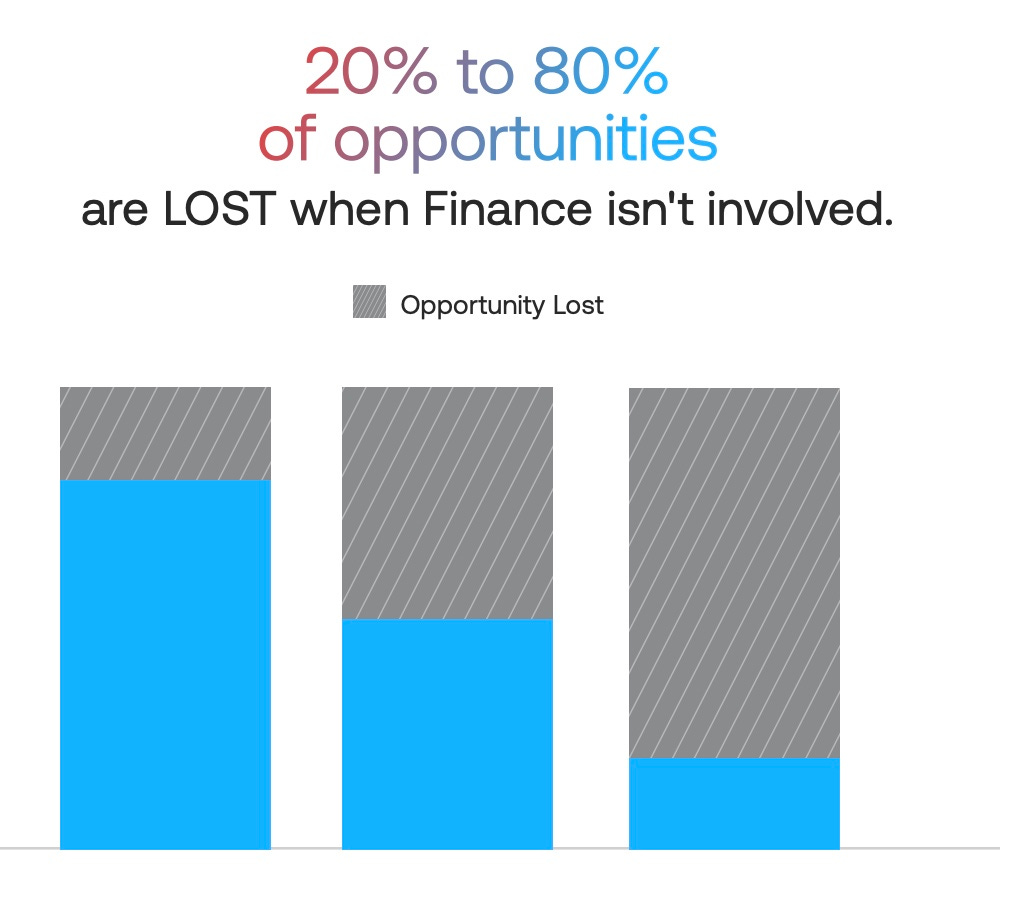
Growth does not happen in silos, measurement shouldn’t either.
Evolve: Balance short-term returns with long-term value
If there is one insight that consistently challenges short-term thinking, it is this: marketing impact is not immediate.
ROI Genome® analysis shows that two-thirds of short-term impact occurs after the week of execution, and that 10–50% of media impact is realised in the long term, well beyond typical attribution windows.
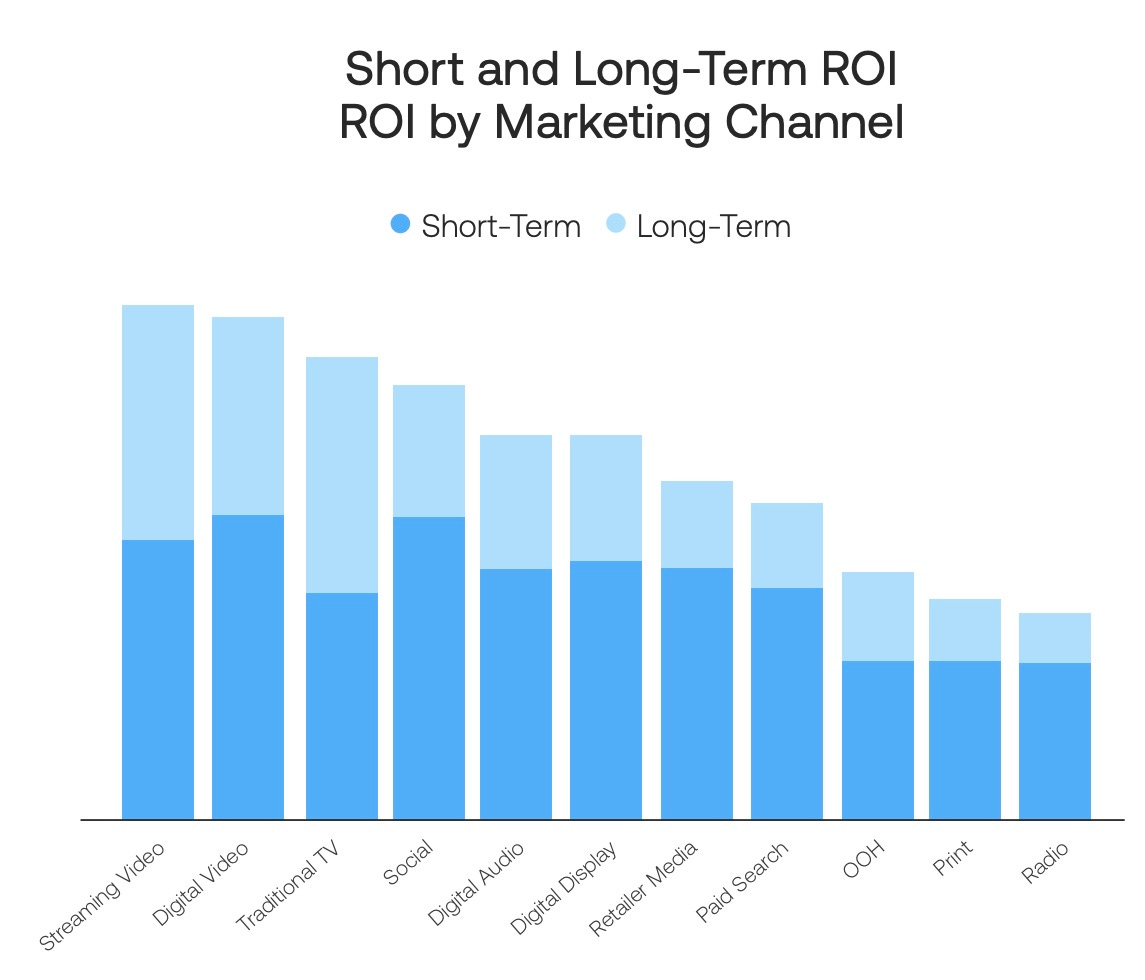
This matters because many optimisation decisions are still being made using last-click or short-term ROAS metrics. These approaches systematically over-credit highly clickable channels and under-value brand-building activity. In fact, last-click attribution can overstate the role of some channels by 2–10x, leading to material misallocation of budget. Brand investment is where this distortion becomes most damaging.
ROI Genome® shows that brands with the highest media ROI consistently allocate at least 30% of their budget to brand equity-building activity. When organisations move from a performance-only strategy to a balanced brand and performance approach, they see a median 90% increase in revenue ROI. Move back the other way, and returns fall by around 40%. Not to sound like a stuck record but, brand is not a soft metric it is a multiplier.
The same pattern appears in creative quality and timing. Strong creative outperforms weak creative by 2.5x, and brands that align spend with periods of natural demand achieve 30% higher ROI.
Operationalise: Make insight usable, not theoretical
Insight only creates value when it changes behaviour.
The final step is embedding analytics into everyday decision-making, so that insight travels beyond the marketing team and into the organisation.
This is where many programmes stall. ROI Genome® shows that businesses with strong organisational adoption of analytics grow five times faster than those where insight remains trapped in reports and presentations .
The most effective organisations do three things consistently.
First, they move beyond last-click thinking. For every dollar allocated based on siloed ROAS or attribution metrics, 35 cents of opportunity is lost. Holistic measurement surfaces the true drivers of growth and protects investment from false efficiencies .
Second, they use scenario planning as a core management discipline. Brands that adopt consistent scenario planning through Commercial Analytics see 50% ROI growth over five years, with top performers doubling ROI in as little as four to six years .
Third, they commit to the long game. ROI Genome® shows that brands that maintained or increased media investment during economic downturns achieved 17% incremental sales growth, alongside stronger ROI and brand health. Short-term wins matter, but sustained growth is built over time .
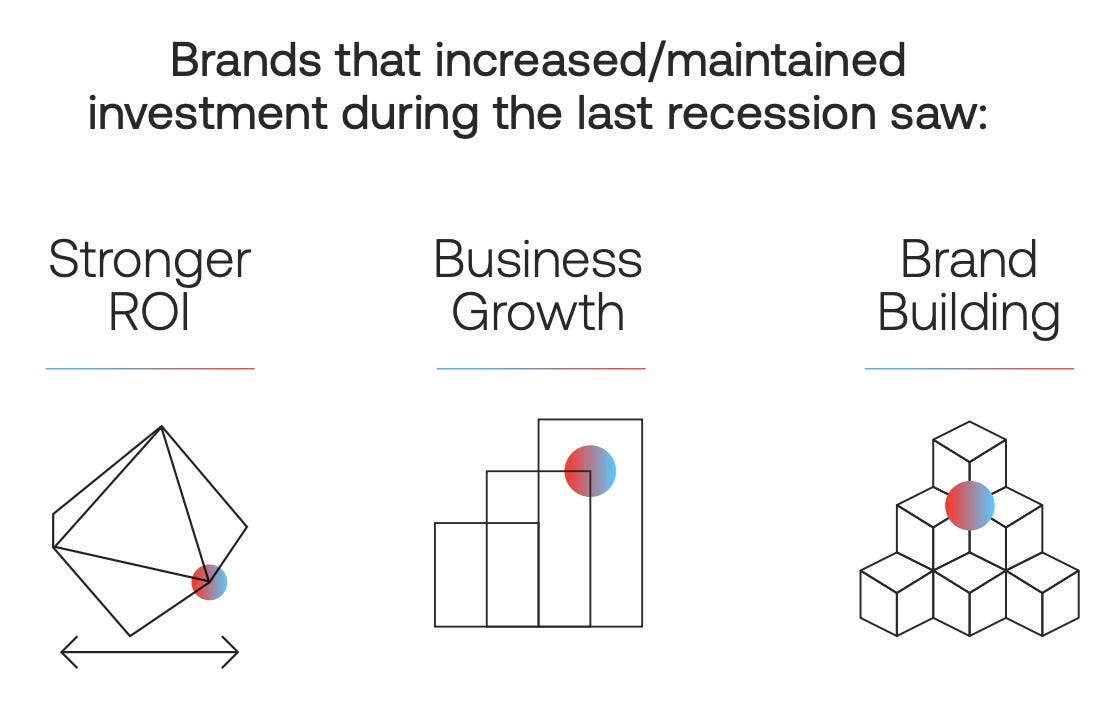
Growth is a leadership choice
The real lesson from ROI Genome® is not about channels, tactics or tools. It is about leadership.
Growth comes from making better decisions, faster, with a clearer understanding of how marketing, pricing, operations and external forces interact.
CMOs who embrace this broader commercial view stop defending budgets and start shaping strategy. They move from reporting performance to engineering growth. And in an increasingly complex, volatile market, that shift may be the most valuable one of all.
Want more insights on how to grow bigger, quicker? Download the ROI Genome Growth Insights report now.