

Marketing With Shrinking Budgets: How to Grow When the Easy Money Is Gone
Guest post by Kauri J. Ballard, Senior Director, Analytic Partners
If the past few years have taught CMOs anything, it’s this: budget pressure is no longer cyclical, it’s structural. Across Australia and APAC, marketing leaders are being asked to do more with less. Growth targets remain ambitious. Media costs continue to rise. Finance wants certainty, not storytelling.
The instinctive response is predictable. Cut “non-essential” spend. Push harder into performance. Optimise the mix. But here’s the thing: when budgets shrink, the wrong cuts quietly damage the very growth you’re trying to protect. The question isn’t how to survive shrinking budgets so much as how to reallocate them intelligently.

The First Mistake: Chasing Efficiency at the Expense of Effectiveness
When money tightens, performance marketing looks safe. It converts. It reports weekly. It feels accountable. Yet ROI Genome® evidence consistently shows that brands leaning too heavily into short-term activation suffer a “performance penalty” over time. Revenue returns can decline by 20 to 40 percent when investment skews too far away from brand building. Why? Because performance channels harvest existing demand. They do not create it.
In flat or volatile markets, you can only squeeze so much from the same in-market audience before costs rise and returns plateau. Shrinking budgets demand sharper allocation, not narrower thinking.
The Multiplier Effect: Why Brand Works Harder Under Pressure
One of the most persistent myths in constrained environments is that brand is a luxury because the data says otherwise. Campaigns that balance brand and performance consistently deliver stronger total revenue returns than performance-only approaches. Strong brands convert more efficiently. They reduce price sensitivity and amplify media effectiveness
In practical terms, allocating at least 30 percent of media spend to equity-building activity provides the foundation for sustainable performance. Below that threshold, the multiplier weakens, which is exactly what we’re seeing play out across Australian FMCG brands right now.
Several have shifted to consistently back their Masterbrand on TV and Out-of-Home (OOH), while allowing individual product campaigns and launches to live primarily online. The logic is simple: Masterbrand media drives efficient reach, and that reach creates a halo effect across every smaller digital campaign.
One of our FMCG clients is a perfect example. After shifting to an always-on Masterbrand strategy offline, their product-level digital ROI did not dip, even without product-specific offline support. The Masterbrand campaign was already building demand for the whole portfolio.
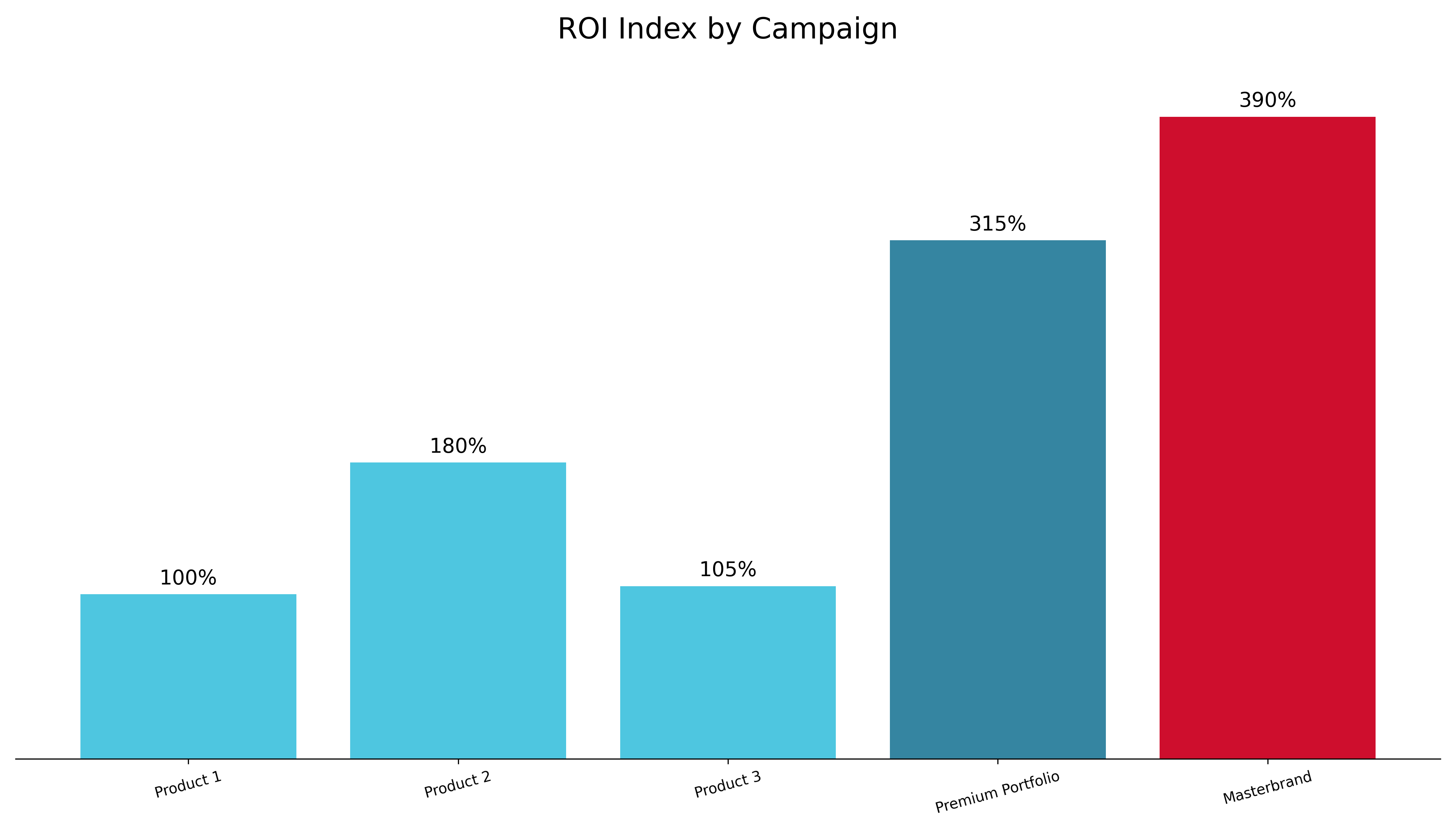
THE LESSON: Fund the brand properly, and it works for the portfolio.
What the Data Says About Channel Mix
ROI Genome® reinforces this structurally. The most efficient combination for many FMCG brands is a Masterbrand campaign across TV and OOH supporting digital product-level activity online. TV and OOH build mental availability at scale. Digital converts that demand.
However, brands operating with budgets in the AUD $1–2 million range often assume TV is essential to achieve this balance. That isn’t always the case.
Our data shows that OOH combined with digital can outperform TV + digital at certain budget levels, particularly when it allows brands to stay in market longer. OOH provides sustained reach at lower cost and strengthens digital performance through cross-channel reinforcement.
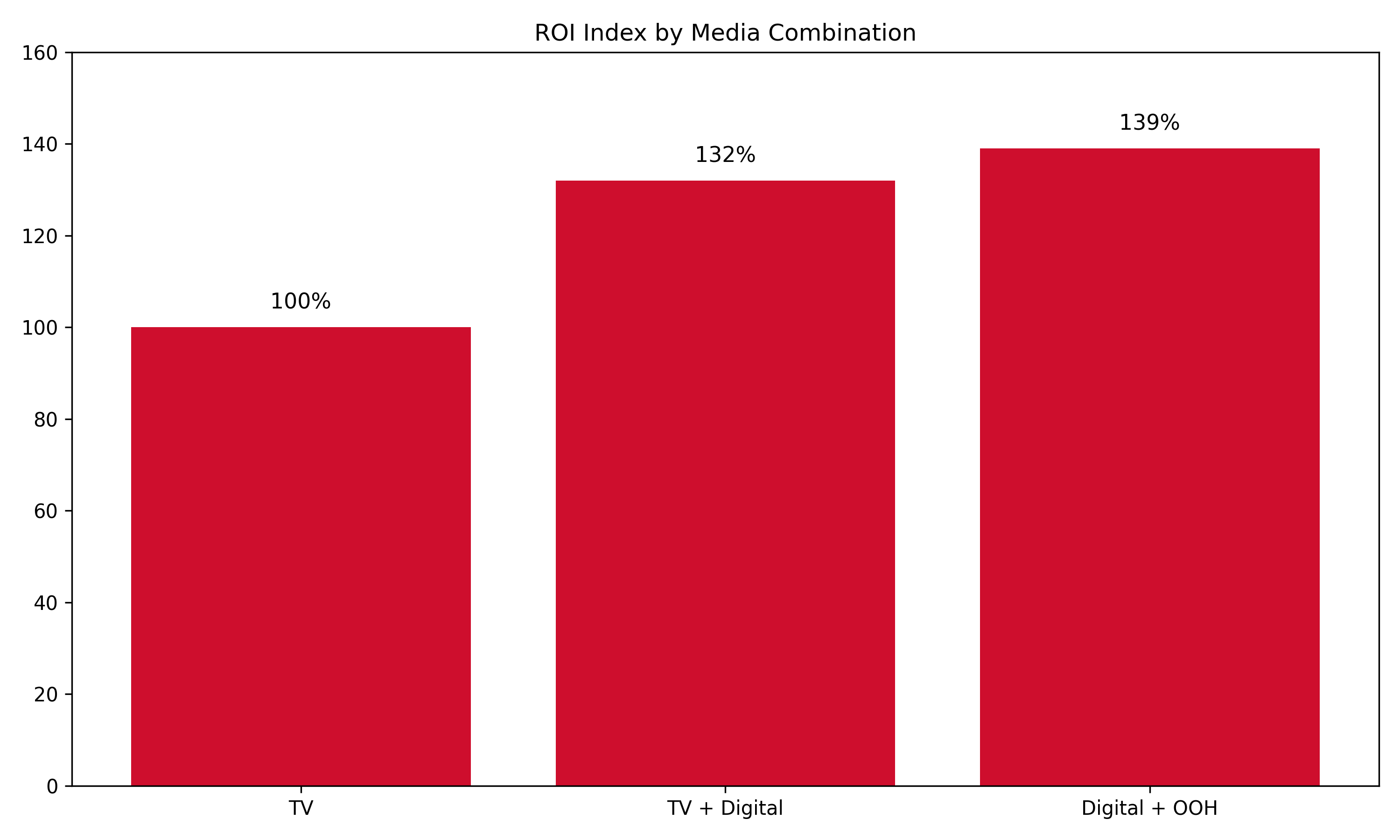
THE LESSON: For smaller budgets, OOH + Digital can be a powerful alternative to TV.
Continuity Compounds ROI
Another silent ROI killer in shrinking budget cycles is blank space. Our models consistently recommend leaving no more than 12 weeks between campaign bursts. Beyond that, cumulative impact erodes and you effectively have to “rebuild” brand momentum each time you return to market.
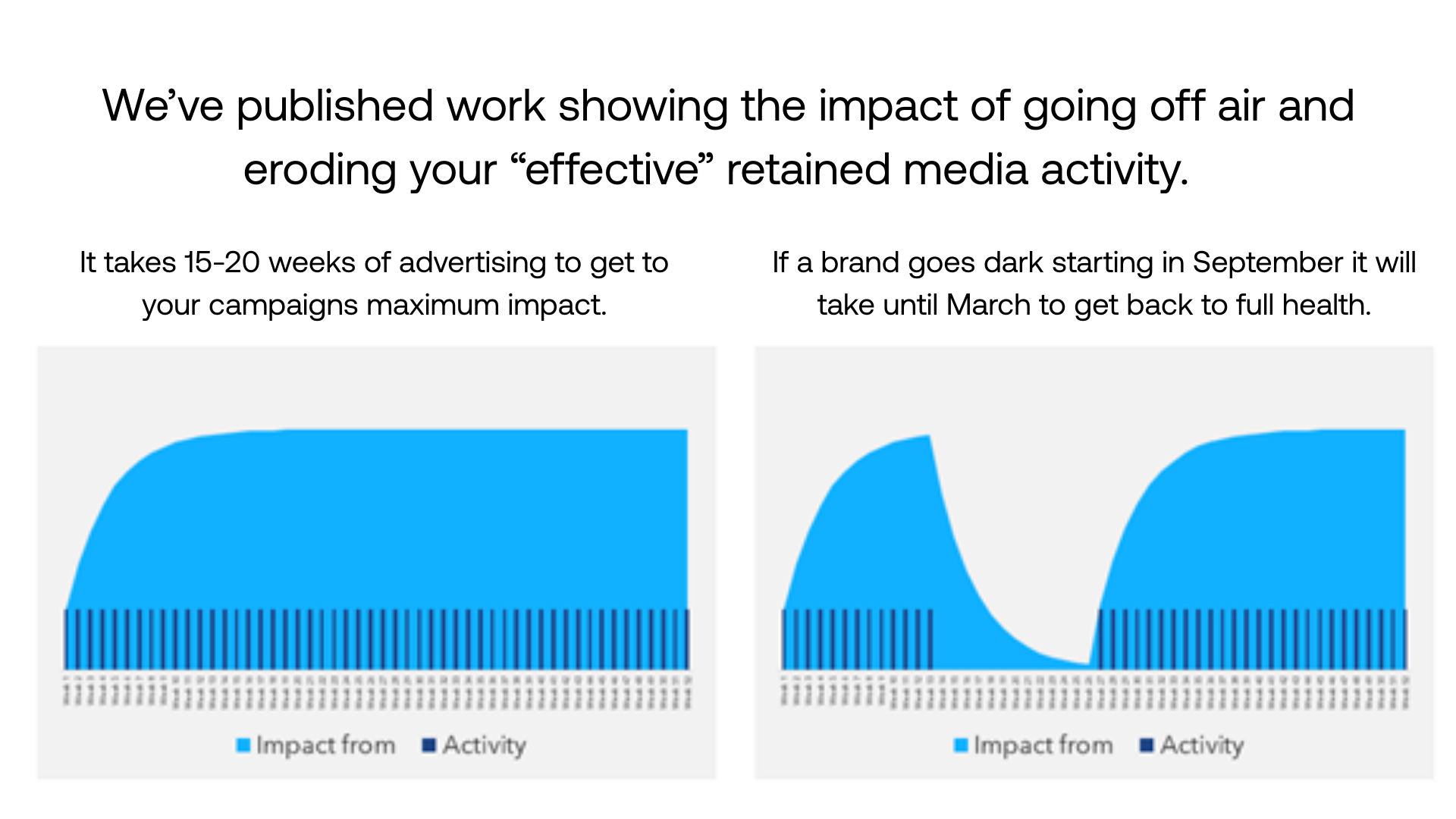
In practice, continuity doesn’t have to rely on a single channel. A powerful approach we increasingly see is OOH combined with video platforms such as YouTube, BVOD and SVOD. OOH maintains consistent physical presence and reach, while online video sustains emotional storytelling and reinforces brand memory. Together, they allow brands to remain visible between major campaign bursts without the cost of continuous TV.
THE LESSON: Continuity isn’t about constant spend, it’s about avoiding complete absence.
When TV Isn’t Viable, OOH Can Carry the Load
Where budgets don’t stretch to TV, OOH can do more heavy lifting than many assume. With sufficient investment, OOH can deliver up to 80 percent of the ROI that would be achieved if TV were included in the mix. It drives efficient offline reach and reinforces digital channels to sustain performance.
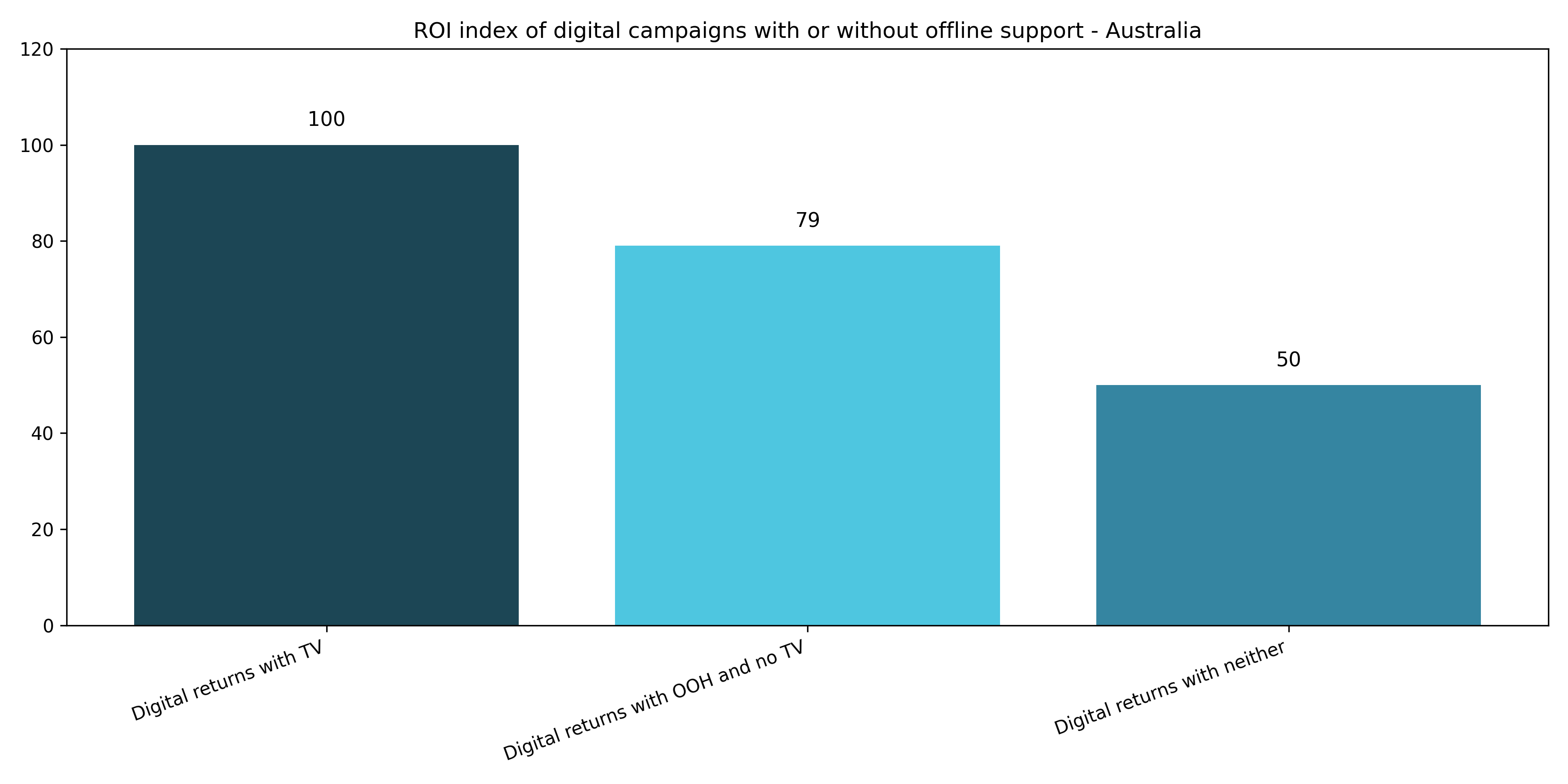
THE LESSON: TV is powerful but it’s rarely binary.
Channel Synergy Matters More Than Ever
When budgets shrink, many marketers instinctively concentrate spend into one or two channels, typically search or social. It feels efficient but it often limits growth. What the data shows is that campaigns operating across multiple complementary channels consistently outperform those concentrated in just one or two. Each additional channel expands reach and reinforces brand memory, which improves the effectiveness of the whole system.
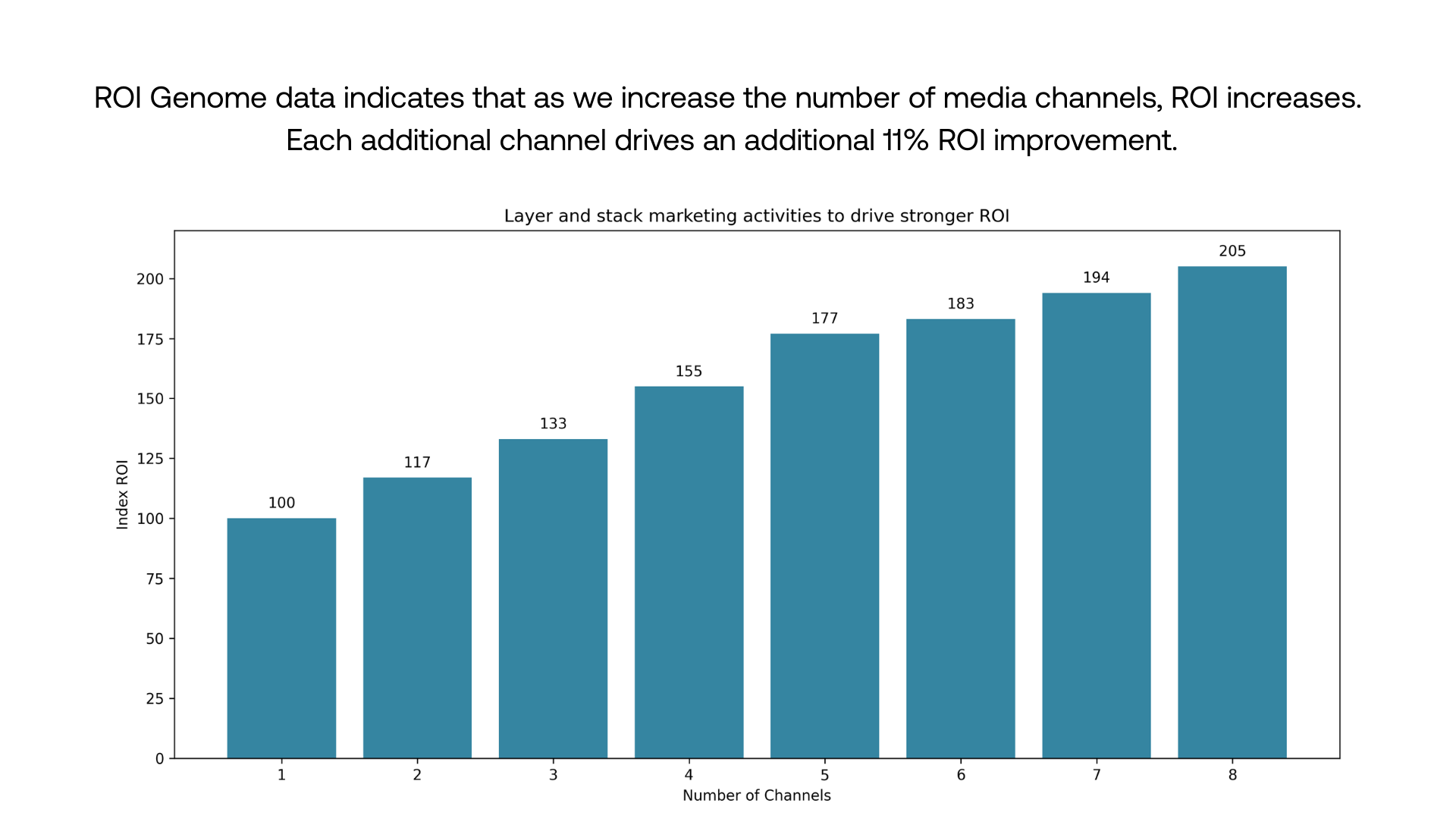
ROI by Number of Channels – Minimum 3 Recommended
The key is not spreading tiny budgets everywhere. It is layering channels strategically at meaningful levels of investment so they reinforce each other. For example, pairing OOH with digital video and online performance channels can deliver both reach and conversion, even when TV isn’t viable.
THE LESSON: Smaller budgets should not mean fewer channels. They should mean smarter combinations of channels that work together.
The Real Opportunity
Budget pressure is uncomfortable but it is also clarifying. It forces sharper prioritisation and challenges lazy allocation. It rewards leaders who can translate marketing decisions into commercial outcomes because shrinking budgets don’t necessarily mean shrinking ambition - they just mean better decisions.
Want Your CFO to Say Yes?
If budget pressure is intensifying in your organisation, the most important shift you can make is aligning marketing decisions with finance language. Our downloadable guide, “How to Get Your CFO to Say Yes”, outlines the commercial frameworks, scenario planning approaches and ROI arguments that resonate with finance leaders.